Showing posts with label plastic bags. Show all posts

Monday, March 7, 2011

BAG IT OREGON! - Take Action!

From the Surfrider Foundation website...

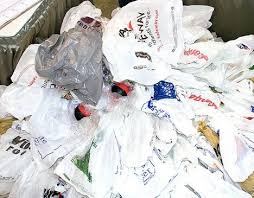
Single-use plastic bags represent one of the greatest environmental catastrophes of our generation. It is estimated that 60-80% of all debris in the ocean is land-based plastic. Plastics take hundreds of years to break down at sea and most types never truly biodegrade. As a result, marine animals often get entangled in the debris or mistake it for food.

For these and other reasons, the Oregon Chapters of the Surfrider Foundation are urging the Oregon State Legislature to pass Senate Bill 536 that promotes the use of reusable bags, bans plastic checkout bags and requires retailers to charge for paper checkout bags.

Starting on Friday, March 4th and running through Thursday, March 10th, the Hollywood Theater will present Bag It, a humble documentary that makes a lasting impression about the prevalence of plastic in our daily lives.

Check out the trailer below:


Bag It Intro from Suzan Beraza on Vimeo.

For more info on how you can help, check out the Portland Chapter's Ban the Bag Facebook page.

Monday, June 8, 2009

So Glad This is Getting So Much Media Attention

From Reuters:

Menaces to oceans: CO2, plastic bags, overfishing

The world's seas are filled with too much garbage and too few fish with flimsy plastic bags and government subsidies bearing much of the blame, activists and trade officials said Monday on the first U.N. World Oceans Day.

The World Trade Organization's director-general, Pascal Lamy, used the occasion to note that some species are at risk of extinction from overfishing, and government subsidies bear some of the blame.

"Governments have contributed to this problem by providing nearly $16 billion annually in subsidies to the fisheries sector," Lamy said. "This support keeps more boats on the water and fewer fish in the sea.

He said WTO members are now negotiating to reform subsidies programs to make fishing a sustainable industry.

U.S. Trade Representative Ron Kirk echoed those sentiments, saying the United States is pushing for stronger rules against "harmful fisheries subsidies that contribute to overcapacity and overfishing."

Eighty percent of the world's fisheries are under pressure, according to the U.N. Food and Agriculture Organization (FAO): overexploited, fully exploited, significantly depleted or recovering from overexploitation.

Global fisheries subsidies are estimated at $20 billion or more annually, an amount equivalent to 25 percent of the value of the world catch. Economic losses from overfishing in marine areas are $50 billion a year, according to a 2008 World Bank/FAO report.

"International trade can play a key role in protecting the world's oceans," Courtney Sakai of the group Oceana said in a statement reacting to Lamy's and Kirk's comments. "The WTO is in the unlikely position of producing one of the most significant actions to stop global overfishing."

CO2 THREAT

In addition to overfishing, the carbon dioxide emissions that contribute to climate change also combine with sea water to form carbonic acid, a corrosive substance that eats away at the shells of mollusks and corals.

Last week, as international climate negotiators gathered in Bonn, Germany, 70 of the world's major science academies reported that ocean acidification was so dangerous that it could be irreversible for thousands of years.

The academies urged those bargaining for a world agreement to stem global warming into take account the risks to the oceans in working on a new U.N. treaty to be agreed in Copenhagen in December.

The U.N. Environment Program and the Ocean Conservancy marked the day with a report on marine litter, from discarded fishing gear to cigarette butts to plastic bags, which the environment program's director called signs of systemic waste.

"Marine litter is symptomatic of a wider malaise: namely the wasteful use and persistent poor management of natural resources," said Achim Steiner, U.N. under-secretary-general and UNEP Executive Director.

The ubiquitous flimsy plastic shopping bag is a particularly nettlesome problem, said the environment program's spokesman, Nick Nuttall.

In a telephone interview from Nairobi, Nuttall said that "these rather pointless flimsy plastic bags, which serve little or no purpose except to choke the oceans and the environment" should be banned or taxed to kick-start recycling efforts.

Last December, the United Nations designated June 8 as World Oceans Day, more than 16 years after it was first proposed at an Earth Summit in Rio de Janeiro.

Tuesday, June 2, 2009

China's Ban on Plastic Bags Saved 1.6M Tons of Oil

From The Guardian:

Banning flimsy plastic bags has been dismissed as a drop in the ocean when it comes to dealing with the world's environment problems, but multiplied on a China scale, it appears to have made a big difference.

A new report suggests restrictions on bag usage in the world's most populous nation have saved the equivalent of 1.6 million tonnes of oil, in the year since it was introduced.

Just ahead of the first anniversary of the ban, the China Chain Store and Franchise Association estimated it had saved the country 40 billion plastic bags.

According to their survey, plastic bag use has fallen by two thirds as consumers grow accustomed to bringing their own reusable bags.

The ban was introduced on 1 June 2008 to reduce "white pollution" – the popular term for plastic bags and styrofoam packaging. Under the new rules, the state forbade production of ultra-thin bags under 0.025mm thick and ordered supermarkets to stop giving away free carriers.

That surprise move – which went further than anything done by the US, the UK and many other developed nations – was hailed by Greenpeace, Earthwatch and other green groups as a sign of growing environmental awareness in China. It also lead to the closure of the state's biggest plastic bag manufacturer.

Although the ban is often flouted, particularly at street stalls and small shops, it is widely praised for helping to change attitudes.

"It has made an impression," said recent graduate Xuyang Jingjing. "I see more people carrying 'green bags' to supermarkets these days. But I think if the government really wants people to stop using plastic bags, it should have the shops giving out green bags for free."

But there is a long way to go. China produces a million tonnes of rubbish a day with the volume looks set to rise.

DC Council Unanimously Approves Bag Use Fee!!!

Today the DC City Council unanimously approved the Anacostia River Clean Up and Protection Act of 2009!

"Wherever the fault lies, the fact of the matter is our country's becoming inundated with plastic bags and plastic bottles," said council member Jack Evans, Ward 2 Democrat. "This is a first step to try to address that issue."

A second vote will be necessary before it goes to Mayor Fenty for his signature, but with the unanimously passing it looks like smooth sailing!

Tuesday, May 19, 2009

Trash Free Anacostia!


The vote for B18-150, the Anacostia River Cleanup and Protection Act of 2009 is coming up quickly! Clean Water Action has made it very easy to contact the DC City Council and urge them to pass this legislation! Just follow the link and add any additional comments you'd like to send!

Thursday, May 14, 2009

More Good News! Trash-Free Anacostia

From the D.C. Wire:
Committees: Bring A Bag Or Pay A Nickel

Two D.C. Council committees approved legislation today that would require consumers to pay 5 cents for paper or plastic bags at grocery stores, convenience stores and other retail outlets where food is involved.

The Anacostia River Cleanup and Protection Act of 2009 could end up being the toughest law on plastic and paper bags in the country, forcing consumers to use reusable bags.

According to a press release from Council member Tommy Wells (D-Ward 6), "the Committee on Finance and Revenue and the Committee on Government Operations and the Environment held back-to-back meetings to mark-up and approve the legislation this morning."

The idea is that the legislation will target plastic bags, which are helping to pollute the Anacostia River. Plastic bags travel as litter into storm drains and intor the river. Paper bags was included in the legislation when store owners explained the expense of providing consumers with paper, instead of plastic.

"Over 20,000 tons of trash enters the Anacostia River each year leaving a polluted, dirty and neglected river bordering our neighborhoods - today's vote is a big step in the right direction," Wells said in a statement.

Advocates for low-income residents and the plastics and paper industries have lobbied against the legislation as costly for poor people who would have to worry about a "bag tax" when they are trying to buy groceries. The legislation would provide low-income and elderly residents with reusable bags.
Congrats to everyone on their hard work!

Monday, March 16, 2009

What to Do With All Those Plastic Bags?

Now as much as I diligently try to remember my reusable shopping bag, there are times when I end up at the grocery store without one. Or as I found out over Thanksgiving, my mom hoards them to line her trash cans (yeah mom for reusing). So after a while, if you are like me, you end up with a nice supply that I usually take some place to be recycled.

Here's an interesting alternative:


Marlo's Crochet Corner gives instructions on how to crochet your very own recycled plastic tote in several designs including instructions on how to make a plastic ball of "yarn". Now I haven't crocheted in years, but I found the process fairly simple. I'm probably 1/2 of the way done with my gigantic tote (ok so I went a little crazy with it). But it seems likes it's going to be an extremely durable bag great for the beach!

Click here for instructions!

Wednesday, March 11, 2009