Monday, April 20, 2009

Climate Change in the Media; A Bit of Realism Please!

With Friday's EPA ruling that CO2 should be regulated under the Clean Air Act, every media outlet in the country has been talking about the impacts this will have from legislation/regulation to economics. Most of the articles I've read including The Wall Street Journal have been quoting dire consequences from both coal and electric producers. They claim that passing such legislation will be an "atomic bomb... to the U.S. economy".

From the WSJ article, "American Electric Power, a utility giant with 5.2 million customers in states from Texas to Michigan to Virginia, is already considering what coal plants would have to be shuttered and how high rates would have to go to comply with either a regulatory or legislative mandates to curb carbon dioxide. AEP spokesman Pat Hemlepp said rate increases stretch from 25% to 50% and beyond, depending on the climate change strategy that finally emerges from Washington." Talk about scare tactics!

No one believes that whatever legislation or regulation that gets passed is going to be enacted overnight. Coal-fired plants are not going to be running one day and shut down the next. As much as these spokepeople will try to have you believe, it's just not going to happen.

It's going to be an ongoing process - limits are going to achieved over time. What will happen is that jobs will be created here in this country not lost. We need further research on how we can still use existing plants and reduce emissions. There is already a great site, U.S. Climate Change Technology Program, that outlines ongoing research and technologies being considered led by The Department of Energy.

This administration also has already pledged further funding for research on renewable energy. We already have commercial operations for wind, solar, and fuel cell technologies. With the recent collaboration of FERC and MMS, we should be seeing more research and testing in offshore wind and wave energy. The result - more jobs created and less CO2 released in the atmosphere.


Sherman's Lagoon is Now a Musical!

Sherman's Lagoon, the Musical is a hilarious adventure back in time to when Kapupu Lagoon was a kinder, gentler place; while introducing the audience to the strip's already well-loved characters (e.g. Sherman, Hawthorne, Fillmore, and Ernest,) it highlights the dating trials and tribulations of Sherman and Megan.

Listen to the soundtrack on iTunes or Rhapsody.

The audience also meets some new characters: Ernest's smarter little sister, Bentley, a doo-wop chorus called "The Shallow Soles," and the Musical's two antagonists: the hoary ol' fisherman, Cap'n Quigley, and his new accomplice, the Nifty Fish Niblets Queen, Mrs. Gorton. Together, these two dastardly villains plot to vacuum up the oceans of the world - until not a single fish remains!

Complications ensue as Fillmore decides to head off to the Annual Ascension Island Sea Turtle Jamboree, the Big Kahuna's dating advice is cryptic and no help (as usual,) Ernest thinks he has the solution - but doesn't, and Hawthorne is, well, Hawthorne. By the end of the show, Sherman finds himself having to actually save the Lagoon!

Tuesday, April 14, 2009

FERC and MMS Reach Agreement on US Outer Continental Shelf


On April 9th, an agreement was finally reached between the Federal Energy Regulatory Commission (FERC) and the Interior's Minerals Management Service (MMS) on the control of leasing, licensing, and regulating for all renewable energy development on the U.S. Outer Continental Shelf.

Under the agreement:
  • MMS has exclusive jurisdiction with regard to the production, transportation, or transmission of energy from non-hydrokinetic renewable energy projects, including wind and solar. MMS also has exclusive jurisdiction to issue leases, easements, and rights-of-way regarding Outer Continental Shelf lands for hydrokinetic projects. MMS will conduct any necessary environmental reviews, including those under the National Environmental Policy Act, related to those actions.
  • FERC has exclusive jurisdiction to issue licenses and exemptions from licensing for the construction and operation of hydrokinetic projects on the Outer Continental Shelf and will conduct any necessary analyses, including those under the National Environmental Policy Act, related to those actions. FERC’s licensing process will actively involve relevant federal land and resource agencies, including Interior.
  • FERC will not issue a license or exemption for an Outer Continental Shelf hydrokinetic project until the applicant has first obtained a lease, easement, or right-of-way from MMS for the site. FERC will not issue preliminary permits for hydrokinetic projects on the Outer Continental Shelf. In all leases, easements, and rights-of-way for hydrokinetic projects, MMS will require that construction and operation cannot begin without a license or exemption from FERC, except when FERC notifies MMS that a license or exemption is not required.
This agreement will begin to clarify permitting requirements for companies developing offshore wind, solar, and wave energy.

A copy of the Memorandum of Understanding can be found here.

Saturday, April 11, 2009

Spread the word on water conservation!


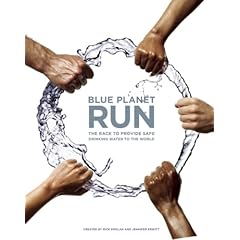
Amazon.com is offering a free copy of BLUE PLANET RUN: The Race to Provide Safe Drinking Water to the World!

Just go here to download your free copy!

Also check out their homepage to find out what you can do to help provide safe drinking water for people around the world!

Friday, April 10, 2009

Getting the kids involved!


With the continued deterioration of the water quality in the Gulf of Mexico, this is a great way to get kids involved in both environmental issues and working with children from other countries.

Water Monitor Eyes Farm Runoff in Gulf of Mexico

Thursday, April 9, 2009

Hurricane forecaster predicts average '09 season

I wouldn't mind just a few small hurricanes that sit offshore and pump some waves our direction. :)
By ESTES THOMPSON, Associated Press Writer – 37 mins ago
RALEIGH, N.C. – The 2009 hurricane season will be less active than last year's flurry of storms, and there's less than a 50 percent chance that a hurricane will hit the southeastern U.S., a researcher said Thursday.

On the Gulf Coast, however, there is a 70 percent chance a hurricane will make landfall.

The N.C. State University team's forecast of 11-14 named storms for the Atlantic season, including six to eight hurricanes, was generally in line with predictions from Colorado State University researchers. They called for an average season with 12 named storms, including six hurricanes — two of them major.

Last year was one of the most active hurricane season's on record, with 16 named storms, including eight hurricanes, forming in the Atlantic. Five of the eight hurricanes were at least Category 3 strength.

The forecast from the N.C. State team led by Professor Lian Xie said there was a 45 percent chance a hurricane would hit the southeast coast and a 40 percent chance a major hurricane would hit the Gulf Coast.

"We anticipate the overall activity of the 2009 Atlantic hurricane season to be close to that of an average season seen in the past 20 years," said Xie, whose team evaluated 100 years of hurricane positions and intensities along with weather patterns and sea surface temperatures.

Last year's forecast was for a slightly more active season than average with 13 to 15 named storms, he said.

"I would also like to emphasize that long-range hurricane predictions, although have shown some skill in the past, are still not a precise science," he said.

The Atlantic hurricane season runs from June 1 to Nov. 30.

It's about time - but they can do better!

During my sophomore and junior years (96-97) in college I actually co-oped for Kimberly-Clark's research division in Neenah, WI. I was in charge of researching biodegradable polymers my first semester and the second semester creating a biodegradable diaper. Well, I haven't seen that launched yet, 12 years later, but you'd figure they would have been a little more on the forefront of the whole recycled paper market.

I think 40% recycled material is pretty weak as there are plenty of options out there with 100% recycled material.

Kimberly-Clark Launches Recycled Paper Products

CHICAGO (Reuters) - Kimberly-Clark Corp is going "green" in toilet paper, napkins and paper towels, launching a line of consumer paper products that uses recycled material.

The launch this month of Scott Naturals makes Kimberly-Clark the first major paper products maker to have a full line that taps into the growing market for environmentally friendly products.

It follows on the success other mainstream manufacturers have had in selling products that are marketed as environmentally friendly, most notably Clorox Co's Green Works line of cleaners, which already accounts for a big chunk of that company's sales growth.

The success of Green Works, launched in late 2007, helped demonstrate that "green" products would be purchased by more than just a handful of consumers, said Brian Morgan, senior research analyst at market research firm Euromonitor International.

"Some of the big players, they really weren't convinced that it could be a mainstream strategy," he said.

Kimberly-Clark said consumers who buy Scott products --the company's lower-priced "value brand" compared with its Cottonelle and Viva lines -- have been asking for environmentally friendly paper products.

"We think there is a big, key, unmet need for consumers of getting the right price, quality and environmental benefits," Scott brand director Erik Seidel told Reuters in an interview.

The U.S. market for toilet paper, napkins and paper towels totaled $11.89 billion in 2008, according to Euromonitor.

Charmin and Bounty maker Procter & Gamble Co does not make recycled paper products, and a spokesman would not comment on any future plans. Georgia-Pacific, whose brands include Quilted Northern, does not have a full line of products marketed as containing recycled fibers, but does have recycled fibers in some of its products, a spokeswoman said.

SO-SO SOFTNESS

Paper products with recycled fibers have been a hard sell to all but the most environmentally concerned consumers because of the perception that they do not perform as well as standard products when it comes to aspects like softness.

A recent test by Consumer Reports found that Marcal's Small Steps and Seventh Generation's toilet papers -- two of the larger "green" options -- were still "only so-so" in terms of softness, despite recent changes in formulation.

"You have to have a balance of having that (environmental) element with something that is effective," Morgan said.

Kimberly-Clark said it is using a blend of recycled and virgin fibers to feel and absorb more like standard products.

The Scott Naturals toilet paper has 40 percent recycled fiber, while the paper towels have 60 percent and the napkins contain 80 percent.

The cost of the napkins and paper towels is in line with Scott's traditional products, while the toilet paper costs 6 percent more because it is more expensive to manufacture, Seidel said.

Keeping the price in check may help Scott Naturals' viability.

"With paper products, it's much more commoditized than with household cleaning," Euromonitor's Morgan said. "People aren't willing to pay even 10 or 20 cents more per unit."

(Reporting by Brad Dorfman, editing by Matthew Lewis)